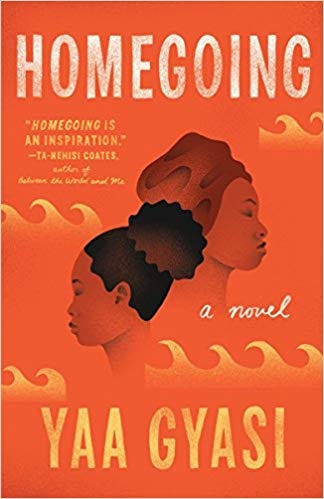
The first time I heard about Homegoing was sometime last year but I somehow never got to read it majorly because of the volume of school work. But four days ago, I began reading the book and all of a sudden, I cannot stop myself from preaching the gospel of Gyasi. I feel very strongly about this book so I decided to share a couple of my thoughts and feelings about Gyasi’s debut novel
Homegoing begins in 18th century Ghana by telling the stories of two half-sisters; and with care only associated with spiders, Gyasi weaves a gripping tale of how these sisters led their lives and how factors within and beyond their control separated entire generations of their descendants on either side of the Atlantic for more than 300 years.
Given that the plot of this book spans about 10 generations across 30 decades, I loved that this book (or at least the version I read) did not begin with a family tree as doing so would have introduced needless complexity to a story that demanded to be understood one character at a time. By structuring the story in a manner that flowed naturally with the descendants, Gyasi trusted the reader to make sense of the beautiful story without lines and boxes that physically represented the position and ancestry of all the members of the family . The story itself was the family tree and the author made you realise this after the first couple chapters as if to reward you for your perseverance.
With Homegoing, Yaa Gyasi presented with distinction, a part of my history that I did not feel the need to know until I picked up her book four days ago. A part of my history my social studies teacher in primary school told me ended with identifying the Point of No Return at Badagry, Lagos, Nigeria. But Gyasi, with the finesse of a master, takes the reader a step further, from the dungeons of Elmina castle, through the raging tides of the Atlantic, to the cotton farms in Mississippi and the coal mines of Alabama.
Gyasi introduces her characters one at a time, ensuring they take center stage in their own stories. This not only made the book easier to understand, but it also allowed the reader to become familiar, to feel the humanity, the personalities of said characters. She did this with zero compromises on language.
This book taught me love and it made me understand grief. With this book, I could pretend to know what leaving home must have felt to men and women of centuries before. But most of all, this book schooled me in history. The history of people whose defiance made them fish food on the Atlantic. The history of those who ended up in faceless graves across the mines of Alabama. And the history of men and women who remained — at home.
This was a book that ticked for me all the boxes that define an excellent work of prose. Homegoing was historical fiction told with the finest of words and the brilliance of poetry.
I do not know if Yaa Gyasi is a god, but I can assure you that she writes like one.
Originally published on Medium